Artificial Intelligence can assist with Human Resources tasks, but task automation is not the same as replacing an entire HR role. A question many professionals are asking is, "Are HR reps being replaced by AI?" Although it's a legitimate worry, the situation is more complicated than that.
The Role of AI in HR: Enhancement vs. Replacement
We can view AI as an addition rather than a substitute. AI can enhance and amplify our abilities, enabling us to manage routine tasks more effectively. It can support interpersonal communication so that we can concentrate on what really counts — building strong relationships within the company.
Transforming the Hiring Process
AI can assist with the hiring process. It may speed up the search for candidates. The tools can analyse resumes and assign scores based on predetermined standards, but scores are not proof of objectivity.
- Use job-relevant criteria. OPM's structured-interview guidance calls for common questions and rating standards. US ADA guidance says tests must assess job skills, not disabilities.
- Check AI rankings or summaries against original applicant or interview records before relying on them: NIST warns that generative AI can produce false content and amplify bias.
- Leave hiring decisions with an accountable person, not the automated ranking.
AI-Powered Communication: Chatbots and Virtual Assistants
AI chatbots and virtual assistants can support HR operations. They can answer routine inquiries from candidates and employees based on the company's policies. Verify policy answers and offer human escalation for uncertain or sensitive requests: NIST warns that generative AI can produce false content.
Predictive Analytics in Human Resources
Predictive analytics powered by AI may offer information about talent gaps, employee trends, and turnover rates. Through data analysis, artificial intelligence (AI) may assist us in making informed decisions about managing employees; investigate outputs rather than treating them as guaranteed predictions. Review employee-data use; NIST flags privacy risks in generative AI.
Redesigning HR Jobs and Emerging Roles
With AI doing routine tasks, the role of HR may change. Responsibilities such as data analysis and AI oversight may emerge. These responsibilities focus on the management of AI tools and interpreting their outputs. This evolution could enable the HR professional to be more strategic and have greater impact.
Enhancing Employee Experience with AI
AI may make the employee experience personal through customized onboarding and support. Automated tools may collect feedback on well-being and satisfaction to help HR investigate issues, without guaranteeing a more engaged and satisfied workforce. Review sensitive inferences: NIST warns that even inaccurate generative-AI inferences can harm people.
The Human Element: Mitigating Concerns of AI Replacement
As good as AI may be, it should support the human touch in HR. The places where humans outshine machines are in empathy, understanding, and interpersonal skills. Integrating AI without losing these essential human qualities can help HR retain its core values while embracing technology.
A Hypothetical Example of AI Assistance in HR
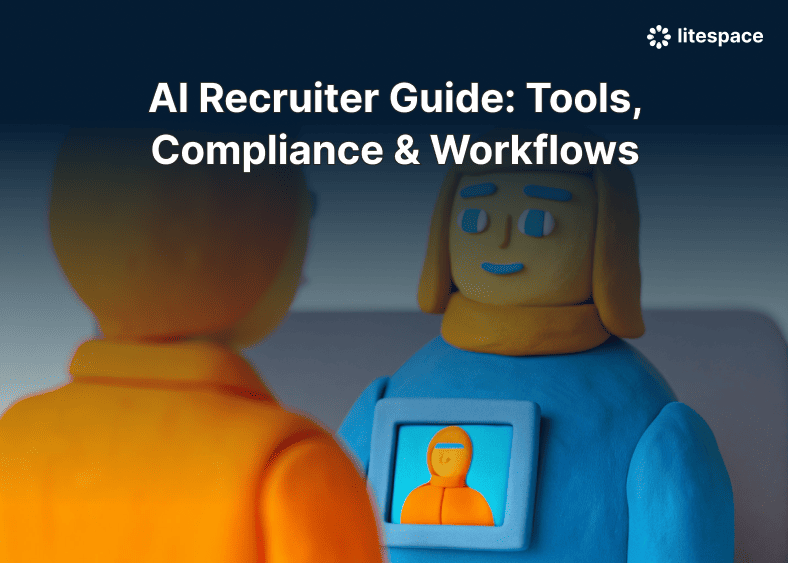
In this hypothetical example, a recruiter reviews AI-drafted interview notes against the original record before choosing follow-up questions. This depicts how AI can assist the HR function without displacing the human touch.
Regulatory and Ethical Considerations in AI HR Tools
The use of AI in HR brings a set of ethical and regulatory responsibilities. For example, AI systems should be fair and transparent. Adherence to ever-changing regulations can help protect the organization and employees by supporting trust and integrity within the HR practice. For employers covered by the US ADA, DOJ guidance recommends reviewing hiring technology for disability exclusion before and regularly during use, and providing a clear process for requesting reasonable accommodations. Human review alone proves neither fairness nor legal compliance; these are limited safeguards, not a complete legal checklist.
The Future Landscape of HR with AI
In the years to come, the role of AI in HR may grow, combining automation with the continuing need for human intuition and empathy. The future of HR may involve more sophisticated AI tools that could enhance our abilities while people remain responsible for preserving the essential human aspects of the profession.
Conclusion
AI can support HR reps, but task assistance does not settle staffing decisions. By automating routine tasks and providing insights, AI may let the HR professional move toward more strategic work that could improve the overall employee experience. Welcoming AI as a partner, rather than a replacement, may support HR in the modern workplace without guaranteeing job security.
Ready to explore AI recruiting assistance? Contact us today to learn more about Litespace's resume screening and interview notes tools.