
.svg)
.svg)

On June 9, 2026, researchers revealed a Check Point VPN flaw (CVSS 9.3) that lets attackers breeze past the login prompt. From airport Wi-Fi to coffee-shop hotspots, the same gap can leak medical records or client contracts—and land you with HIPAA or GDPR fines. We ran hands-on tests of 14 business VPN and zero-trust services, narrowed the field to six, and ranked them so you can pick, deploy, and relax in a single afternoon.
#1 TorGuard Business: compliance and dedicated-IP specialist
Why it’s first
TorGuard Business is one of the few VPN platforms that bundles one dedicated static IP with every plan and will sign a HIPAA Business Associate Agreement on request. Regulated teams get a single whitelisted address and the paperwork to match via the TorGuard Business VPN pricing page.
What you get
- Starter plan: 5 users, 1 dedicated IP, 5 encrypted email accounts, $32 per month billed annually (according to TechRadar)
- Corporate / Enterprise tiers: up to 500 seats; additional static IP blocks can be assigned per user in a drag-and-drop web portal (vendor documentation)
Security and updates
Apps on every major OS support WireGuard, OpenVPN, and a stealth protocol for DPI-heavy networks. Updates ship monthly, and the status feed flags critical CVE patches as soon as they go live.
Why HR/IT like it
A fixed IP cuts down “my address changed” tickets. Audit logs plus the signed BAA satisfy HIPAA or SOC 2 reviewers without extra gateways. If your compliance checklist starts with “static IP and paperwork,” TorGuard checks both boxes in one line item.
Quick litmus test: if a client portal or EHR insists on a static source IP, you can provision it in under five minutes. No add-on negotiation required.
#2 NordLayer: enterprise muscle with user-friendly polish
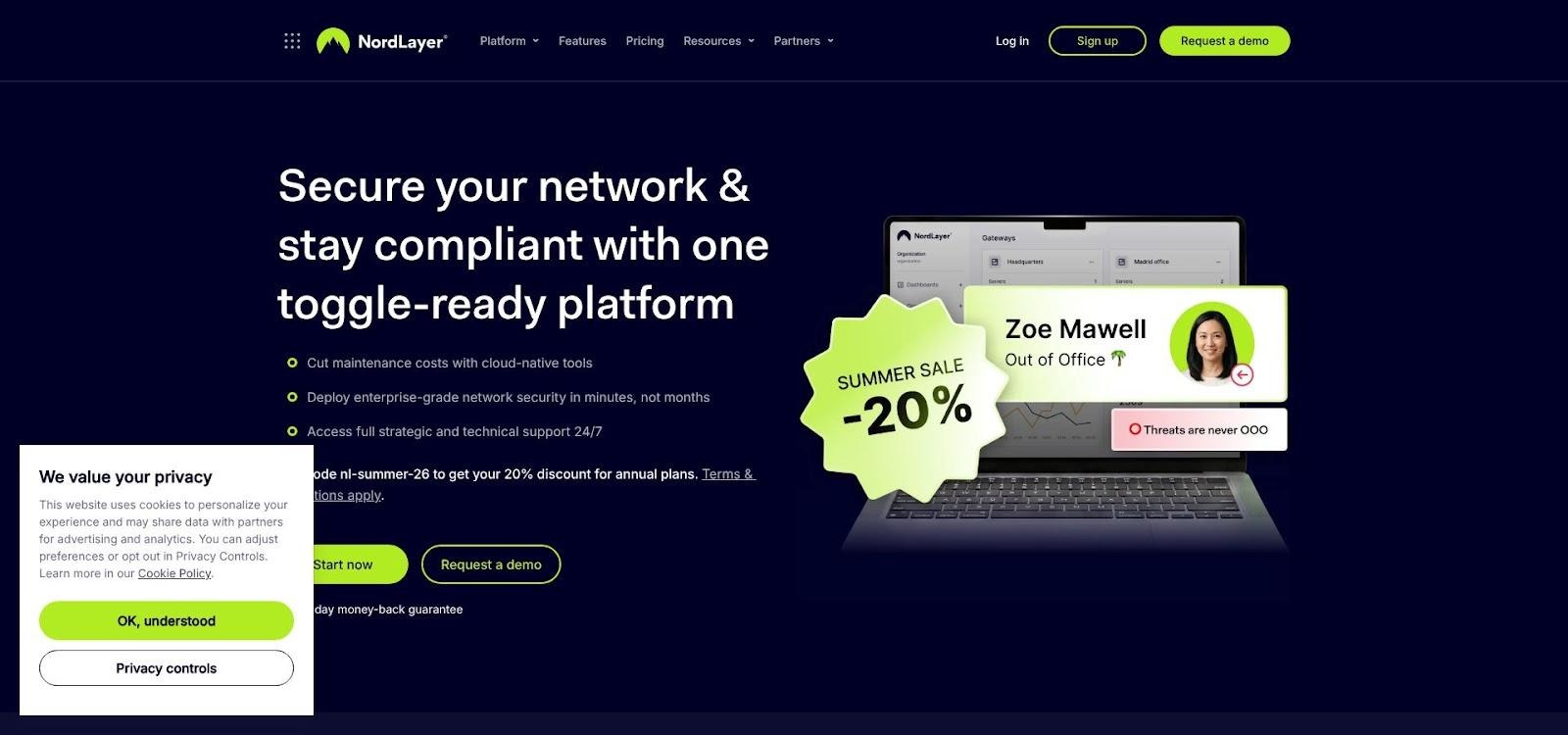
NordLayer admin console screenshot highlighting gateways and zero-trust controls
Why it’s second
NordLayer pairs a slick admin dashboard with controls usually reserved for Fortune-500 budgets: RAM-only servers, SOC 2 Type II compliance, and per-app zero-trust policies.
At-a-glance facts
- Plans start at $8 per user per month (Lite, billed annually; 5-user minimum) and scale to custom Enterprise tiers from $6 per user, each with a dedicated account manager
- A private gateway with a static IP spins up in about 90 seconds; extra gateways cost $40 per month on Core and Premium plans
- Network: 30-plus regions, all WireGuard-powered via NordLynx, with optional site-to-site tunnels for branch offices
Security highlights
- Volatile-RAM infrastructure wipes data on every reboot
- Device-posture checks and ThreatBlock DNS filtering enforce zero-trust hygiene before a tunnel forms
- 256-bit AES or ChaCha20 encryption with an automatic kill switch
Why HR/IT like it
Add five users today, 500 tomorrow; billing scales line by line, and the same control panel handles SSO, MFA, and log exports for auditors. The result is fewer “Did you connect to the VPN?” pings and cleaner compliance audits.
#3 Perimeter 81: one-stop shop for VPN and zero-trust controls
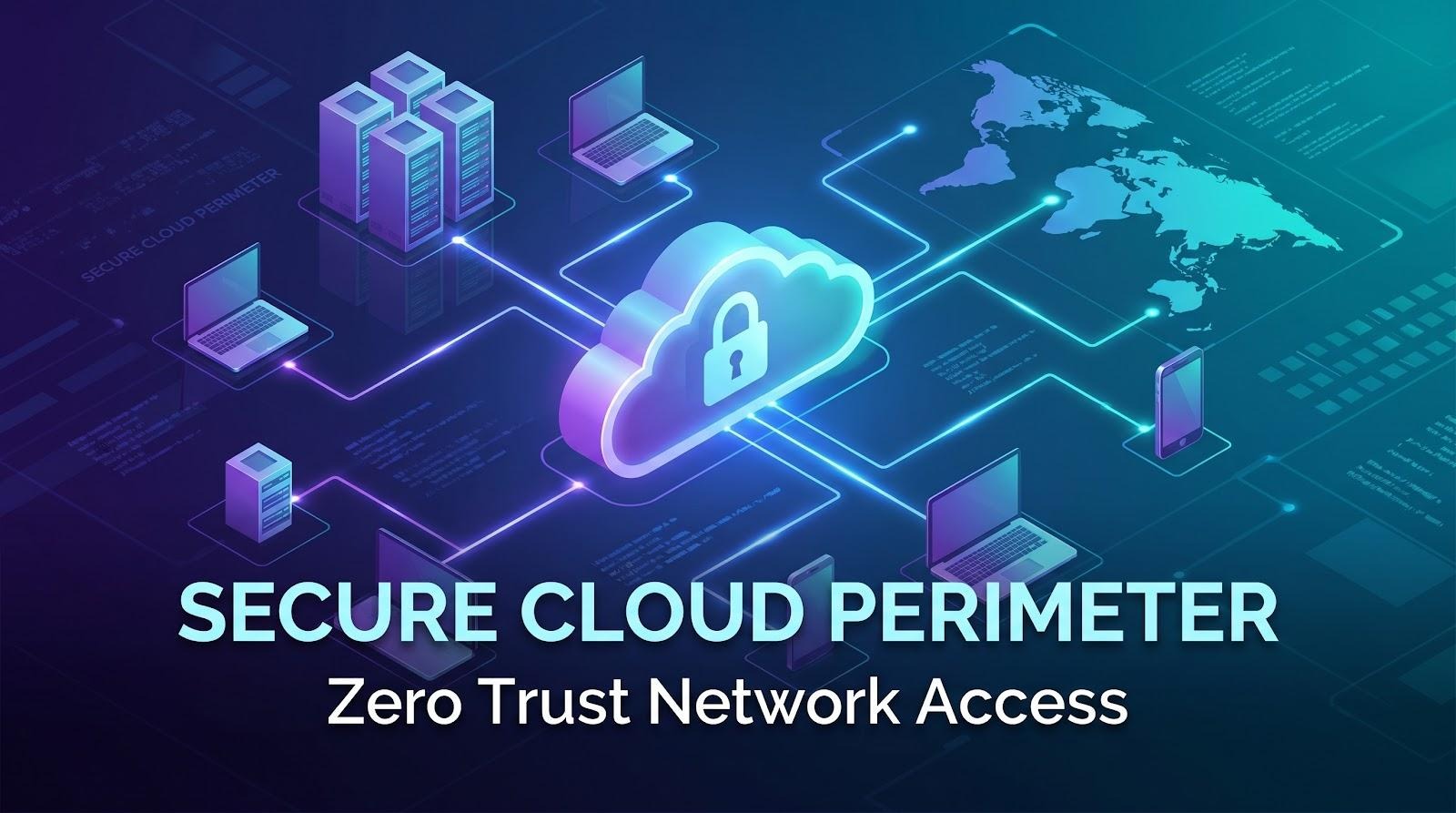
Perimeter 81 dashboard screenshot with live network map and gateways
Snapshot
- Essential plan: $8 per user per month (annual) plus $40 per private gateway (5-user minimum)
- Premium plan (adds SWG and device posture): $12 per user per month, same gateway surcharge
- Compliance: SOC 2 Type II and ISO 27001 certificates are available in the Trust Center
- Global fabric: spin up dedicated gateways in more than 50 AWS and Azure regions; average deploy time under two minutes (vendor SLA)
Why teams pick it
Perimeter 81 opens with a live network map. Click once to launch a marketing gateway, click again to fence engineering to a single VPC, and policies apply in seconds with no client restart.
Security layers include:
- AES-256 plus WireGuard speed
- Device-posture check that blocks unpatched operating systems
- DNS and URL filtering that stops malware before the HTTPS handshake
Think firewall, VPN, and identity proxy on one invoice, which is handy when you would rather manage licenses than rack appliances.
Budget math
Start at eight dollars per seat and add gateways only where you need fixed IPs or data residency. Even with one forty-dollar gateway, a 20-user deployment lands around $200 per month, competitive with running separate VPN and SWG tools.
If auditors ask, the Trust Center links straight to SOC 2 and ISO 27001 letters, and sales can e-sign a HIPAA BAA the same day, avoiding paperwork ping-pong.
#4 GoodAccess: SMB-sized security without the price shock
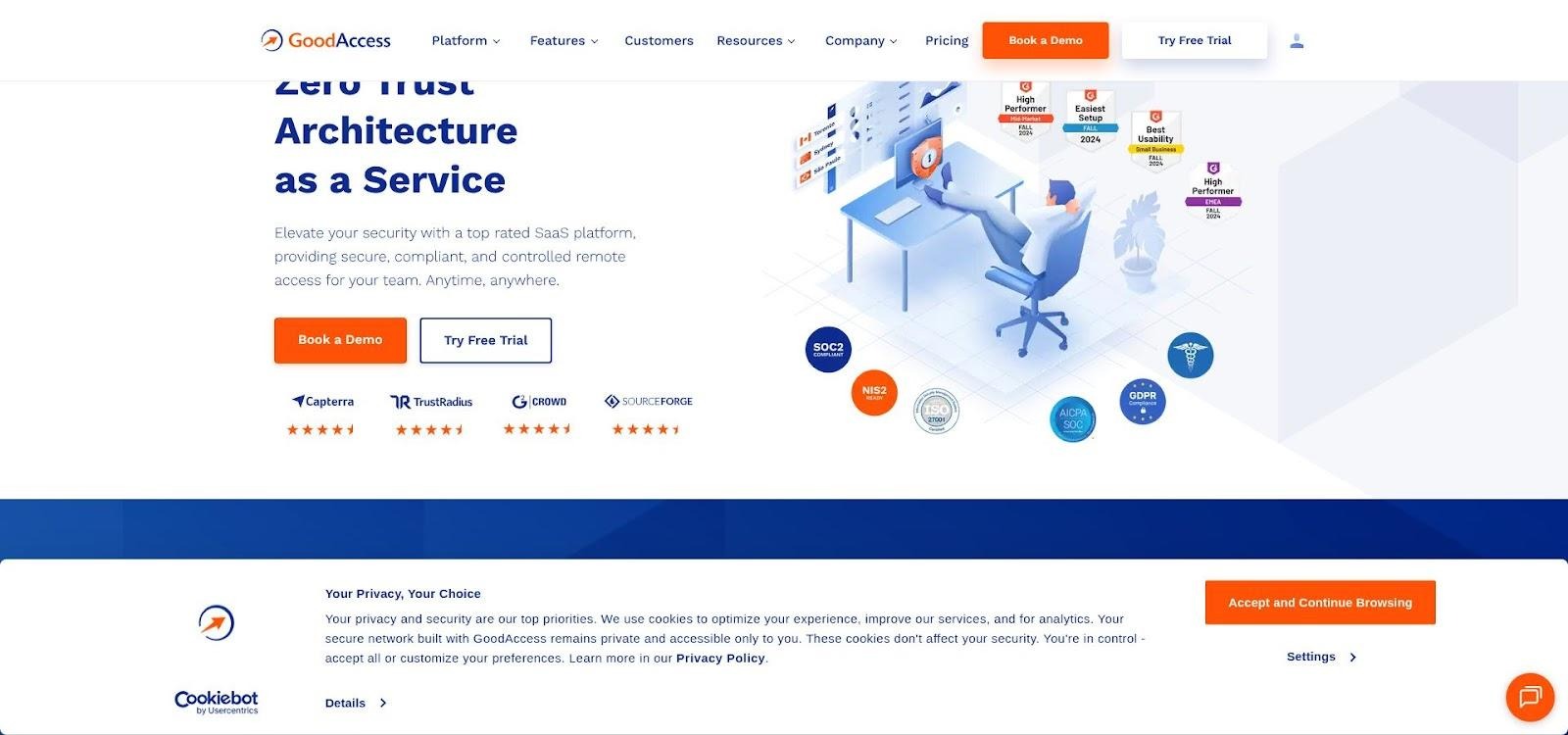
GoodAccess Cloud VPN Static IP Gateway Screenshot.
Why small teams like it
GoodAccess is a cloud VPN that spins up a static IP gateway in about 60 seconds. Sign up, choose from more than 35 regions, and the fixed address appears before the confirmation email arrives.
Money math
- Essential: $7 per user per month (annual, 5-user minimum) with one static IP and a DNS threat blocker
- Premium: $11 per user per month adds longer log retention and SIEM hooks
- Fourteen-day trial with no credit card
Security snapshot
- Protocols: OpenVPN and IKEv2; the always-on option offsets the missing desktop kill switch noted in the TechRadar review
- DNS filtering cuts phishing and malware domains at the gateway
- Zero-trust flavor: a software-defined perimeter restricts traffic to approved apps, and Google Workspace or Azure AD SSO supplies identity
Limits to note
GoodAccess has not yet published SOC 2 or ISO certificates, and throughput can dip on distant gateways. It suits teams under roughly 100 seats that need speedy deployment and a whitelisted IP more than audit badges.
#5 Twingate: zero-trust access that disappears into the background
Twingate is a zero-trust platform that replaces “full-tunnel” VPNs with per-resource WireGuard micro-tunnels. When a user clicks an internal HR dashboard, the tray client checks SSO identity and device health, then opens a path only to that URL; nothing else on the network is visible.
What that means for you
- No “connect” button; users are protected the moment they go online, which trims help-desk tickets.
- Attackers cannot scan subnets they cannot see, so lateral movement stops at the door.
- Admins define resources in a cloud console and assign access via Okta, Azure AD, or Google Workspace groups, and policies sync in seconds.
Plans and pricing
- Free tier: 5 users, 10 remote networks, 1 admin, ideal for proofs of concept.
- Teams: $5 per user per month adds device-posture checks and email support.
- Business: $10 per user per month unlocks SSO, priority support, and longer log retention.
Twingate carries a SOC 2 Type II report, so auditors still get the paperwork even though there is no traditional VPN gateway to inspect.
If you are steering toward zero trust but still need encrypted pipes today, Twingate delivers packet-level control without asking employees to lift a finger.
#6 Cloudflare Access: enterprise edge security, free for 50 users
Cloudflare Access is an identity-aware proxy that sits in front of your private apps and runs on Cloudflare’s 330-plus data centers, which carry roughly 20 percent of all Internet traffic.
How it works
- Install cloudflared to create an Argo Tunnel from the app server.
- Connect Access to your IdP, or use Cloudflare as the IdP.
- Each request is checked for identity, MFA, and optional device posture before reaching your origin, so there is no VPN gateway and no exposed ports.
Performance
Users hit the nearest Cloudflare POP (median round-trip time under 15 ms in the United States) and then traverse Cloudflare’s backbone straight to the tunnel, so personal traffic never clogs the corporate link.
Plans and cost
- Free: up to 50 users at $0, including Access, Gateway DNS, and CASB tools
- Standard: $7 per user per month adds longer log retention and browser isolation
- Enterprise: custom, with 24/7 support and HIPAA or HITRUST addenda
Cloudflare holds SOC 2 Type II and ISO 27001 certificates, and Access logs stream to SIEMs through Logpush for auditor-friendly retention.
If you need zero-trust security backed by a global CDN giant and your team is under 50, you can deploy Access this afternoon without spending a dollar.
FAQ
Which provider offers the most generous free tier?
Cloudflare Access lets up to 50 users connect at no cost, while Twingate provides a forever-free plan for up to five users.
Does every service include a static IP option?
No. TorGuard Business includes one static IP in its base plan, and NordLayer, Perimeter 81, and GoodAccess offer gateways with static IPs as add-ons. Twingate and Cloudflare Access do not rely on traditional gateway IPs.
Which option is best for teams subject to HIPAA?
TorGuard Business stands out because it will sign a HIPAA Business Associate Agreement and provides audit logs, but Perimeter 81 and Cloudflare Access also offer HIPAA addenda on higher-tier plans.
Conclusion
Business VPN and zero-trust tools have converged, but their strengths still vary: TorGuard and NordLayer excel at static IP compliance, Perimeter 81 and Twingate advance granular zero-trust controls, GoodAccess favors speed and price for smaller teams, and Cloudflare Access delivers a generous free tier atop a global edge. Match those strengths to your audit, budget, and user-experience needs, and you can deploy secure remote access in an afternoon.

%20(1).png)
%20(1).png)
%20(1).png)
.svg)


.png)
.png)


.png)


